
At Graham, we believe that culture is the essence of an organization—the DNA that shapes our identity and sets us apart from the competition. That’s why we are immensely proud of our Blue Culture—a constructive culture that drives excellence and accountability. Blue Culture fuels our achievements and fosters an unparalleled sense of unity and purpose among our team members. As we continue to grow as an organization, we want to share with potential employees the heart of what makes us unique and successful.
What is Graham Blue?
Graham Blue is not just a catchphrase; it’s a way of life within our organization. It represents our commitment to driving excellence and accountability in everything we do. Our Blue Culture is built on four pillars that guide us towards a brighter future: Ignite, Explore, Connect, and Grow.
Ignite: A Spark That Unites Us
At Graham, we share a clear vision that acts as a spark, igniting and uniting us as one cohesive force. We understand our roles and responsibilities and empower one another to continuously improve and excel. This passion for progress is what drives us to reach new heights and achieve our goals, both individually and collectively.
Explore: Embracing Innovation and Creativity
In our Blue Culture, we create a safe and challenging environment that encourages exploration and innovation. We welcome creative ideas and embrace new ways of thinking, always challenging the status quo and redefining what’s possible. We understand that growth and progress come from pushing boundaries and embracing change.
Connect: Collaboration and Respect
Unity and teamwork are essential to our success. Our Blue Culture actively promotes cooperation, collaboration, and respect across regions and teams. We strive to be One Graham, an engaged, diverse, and connected workforce, where each member’s unique perspective contributes to our collective strength.
Grow: Nurturing Individual and Collective Growth
Integrity is at the core of our Blue Culture. We take ownership of our personal growth while helping others along their journeys. Accountability and integrity are not just buzzwords but fundamental principles that guide our actions. We believe that by fostering individual growth, we cultivate a culture of continuous improvement and advancement for the entire organization.
Creating a Constructive Culture: A Shared Commitment
Our Blue Culture is the result of a shared commitment to excellence and accountability, with each member of the Graham family playing a vital role in building and nurturing this culture. Through this coordinated effort, we are working together to weave our Blue Culture into every aspect of our organization.
We did this recently by holding a Blue Culture Month in July across our global organization. During the month, we celebrated Graham Blue in several ways, including:
Recognizing our employees for Blue actions and attitudes.
Holding a Graham Blue Day celebration on Wednesday, July 12, which included local activities and two contests employees could enter.
Hosting three mini–Blue Culture trivia games, which were released throughout the month.
Inviting employees to three virtual “Bluesday Bashes” which educated attendees on Blue principles while getting to know one another better.
A Town Hall presentation discussing:
How our Blue Culture journey is going;
How leaders can tailor their management styles to align with Blue Culture; and
How Blue Culture is directly tied to our strategic pillars; our Safety First, Quality Focused initiative; and our commitment to diversity, equity and inclusion (DEI).
And so much more!

Join Us in Creating a Better Tomorrow
At Graham, we are more than just an employer; we are a family driven by a shared vision and unwavering commitment to excellence. Our Blue Culture provides a powerful foundation for the values that make Graham special and the collective strength we embody.
Want to join us in being Graham Blue? Visit our careers page to see available job openings.
LANCASTER, Pa., — (August 2, 2021) — Graham Packaging today announced the appointment of Robert Pyle as its new president and chief executive officer. In this role, Pyle assumes day-to-day leadership of Graham, guiding the company in its ongoing mission of profitable growth and creating sustainable packaging solutions. Pyle joins Graham today, Aug. 2, and is succeeding interim CEO Doug Owenby, who will return to his role as chief operating officer of Graham. Owenby served in the interim after former Graham Packaging CEO, Michael King, left in March 2021 to become CEO of Graham’s sister company, Pactiv Evergreen.
With more than 30 years of experience, Pyle has a demonstrated track record of success leading innovation and transformation across the global automotive industry. He most recently served as executive vice president of Dana and president of Light Vehicle Drive Systems, Dana’s largest business. Pyle has held various other leadership roles in the automotive industry, including president of Asia Pacific at Dana, general manager at Yanfeng Visteon – both based in Shanghai, China – and at ASIMCO Technologies headquartered in Beijing. Pyle began his career at Ford Motor Company, and later Visteon, holding roles with increasing responsibility in finance, sales operations, product development, manufacturing and general management.
“Graham Packaging is a well-known, established global company with a strong sustainability focus, an impressive list of blue-chip customers and exciting, high-volume operations,” said Pyle. “The packaging industry has many parallels to the automotive industry, where meeting customers’ evolving needs and ensuring that products meet the increasing demands of today’s consumers are critical for success. I look forward to leading Graham in maximizing its global growth opportunities while continuing to create innovative packaging solutions driving a more sustainable future.”
“Bob is a particularly strong match for Graham strategically as we pivot from a primary focus on waste elimination to a stronger emphasis on growth,” said Owenby. “Bob has consistently demonstrated the ability to lead large organizations through highly successful operational and commercial transformations, to achieve impressive growth in both revenue and profitability. We welcome Bob and are excited about the extensive knowledge and experience he brings to Graham.”
Pyle earned a bachelor’s degree in industrial management from Carnegie Mellon University and an MBA in finance from the Carnegie Mellon Tepper School of Business.
On Thursday, July 22, Graham Packaging was awarded the Samaritan Counseling Center’s 2021 Ethics in Business Award, which highlights businesses, companies, and organizations in Lancaster County that are committed to operating ethically.
Graham Packaging was selected for its work in five key areas, including integrity, fairness, stewardship, life enhancement and transparent, as well as its dedication to sustainability, company culture, quality benefits and innovation. Congratulations team!
At the start of 2020, Graham kicked off its Employee Resource Group (ERG) initiative, and since then, the groups have continued to grow. ERGs are employee-led groups formed around common interests, common bonds or similar backgrounds. These voluntary, employee-led groups aim to foster a diverse, inclusive workplace aligned with Graham’s goals and objectives. Currently, Graham has two ERGs: Women in Business and Young Professionals.
Lauren Bovard, Corporate Human Resources Generalist, says that there were many reasons Graham was interested in starting an ERG program.
“ERGs are known for engaging employees through various programs, activities, events and community service initiatives,” says Bovard. “Employees join ERGs not only to fuel their engagement, but to grow, develop and network with other employees.”
There are many benefits to ERGs, says Bovard. Those include networking with others outside of an employee’s department, having access to personal development resources and having a direct line of communication to the leadership team, since each ERG has an executive sponsor who is a VP or above that provides strategic guidance and serves as a liaison.
ERGs aren’t a Graham-specific idea, says Bovard. They are common with large companies, with more than 90% of Fortune 500 companies reporting that they have an ERG. ERGs not only help to foster a more inclusive workplace, but also to attract top talent. Roughly 59% of millennials gravitate towards companies that have corporate social responsibility programs, says Bovard. Since Graham’s sustainability program includes social responsibility initiatives, the addition of ERGs has helped to strengthen that position.
With the ERGs in place for just under a year, they have already began to make an impact on the company. The Women in Business ERG has held several events throughout the year, including hosting a financial literacy webinar, sponsoring six women to participate in a leadership workshop series and sponsor a Breast Cancer Awareness campaign in October. Recently, the group also sponsored 25 ERG members to attend the Pennsylvania Women’s Virtual Conference, where they were able to listen to speakers such as Tara Westover and Viola Davis.
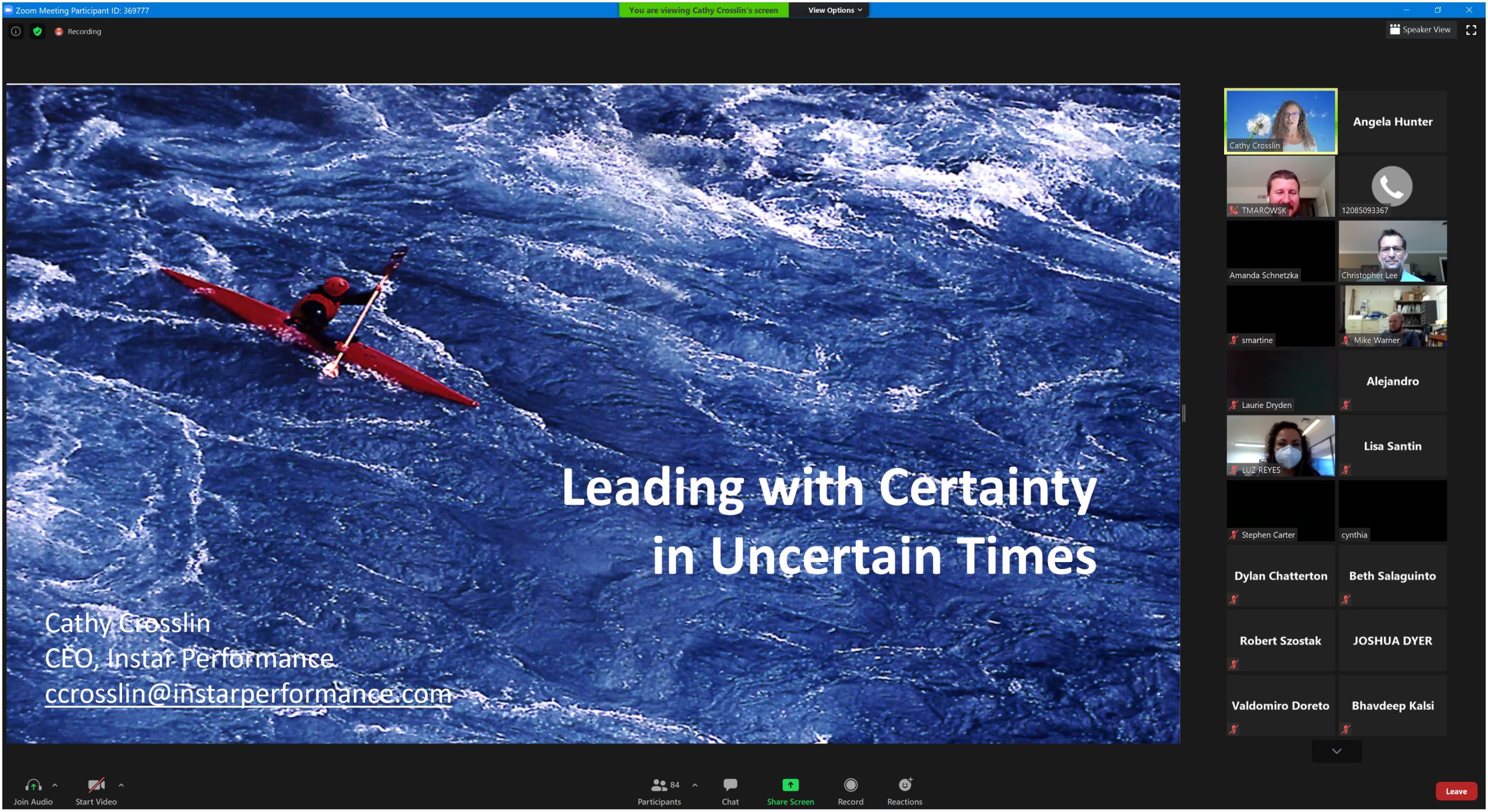
The Young Professionals ERG co-sponsored with the Women in Business ERG a webinar featuring Cat Crosslin from Instar Performance. The presentation was called “Leading in Uncertain Times” and addressed the uncertainty that comes with leading and how to develop a management style as an emerging leader. These types of activities can eventually evolve into ones that have an even more dramatic impact on the company.
“In the future, we could use these ERGs to review internal policies and initiatives,” says Bovard. “For example, Ford uses their ERGs to give feedback on their different car designs.”
Bovard notes that ERGs at Graham focus on three specific areas: workplace, workforce and marketplace. Workplace examples include things like diversity and inclusion training, and workplace culture, while workforce area covers things like recruitment and internship programs. The marketplace area covers items like strengthening community service initiatives, championing the brand and sponsoring internal/external events. As the ERGs continue to expand, these areas will grow, too.
Additionally, anyone can join these ERGs, Bovard stresses. Employees do not need to be a young professional to join the Young Professional group, or be a woman to be in the Women in Business group.
“Anyone can join these groups,” says Bovard. “You can be someone at a mid to senior level and join the young professionals because you want to be an ally and serve as a mentor.”